28 June –
17 September 2023
Exhibition viewing times;
Weekdays: 11.30 a.m. and 5.30 p.m.
Weekends: 12.30 p.m. and 2.30 p.m.
No. 11, 33rd Lane, Bagatalle Road,
Colombo 03
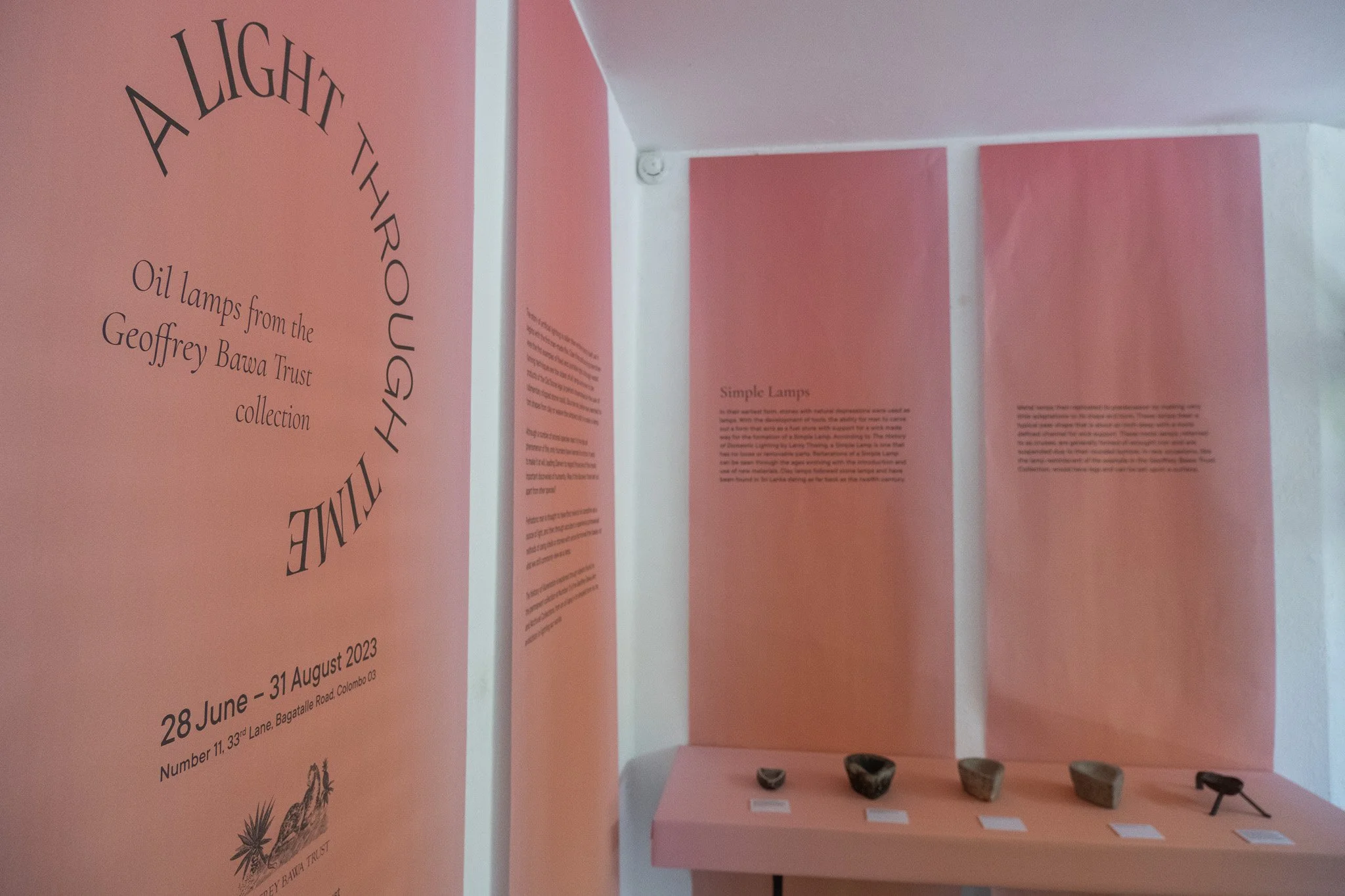
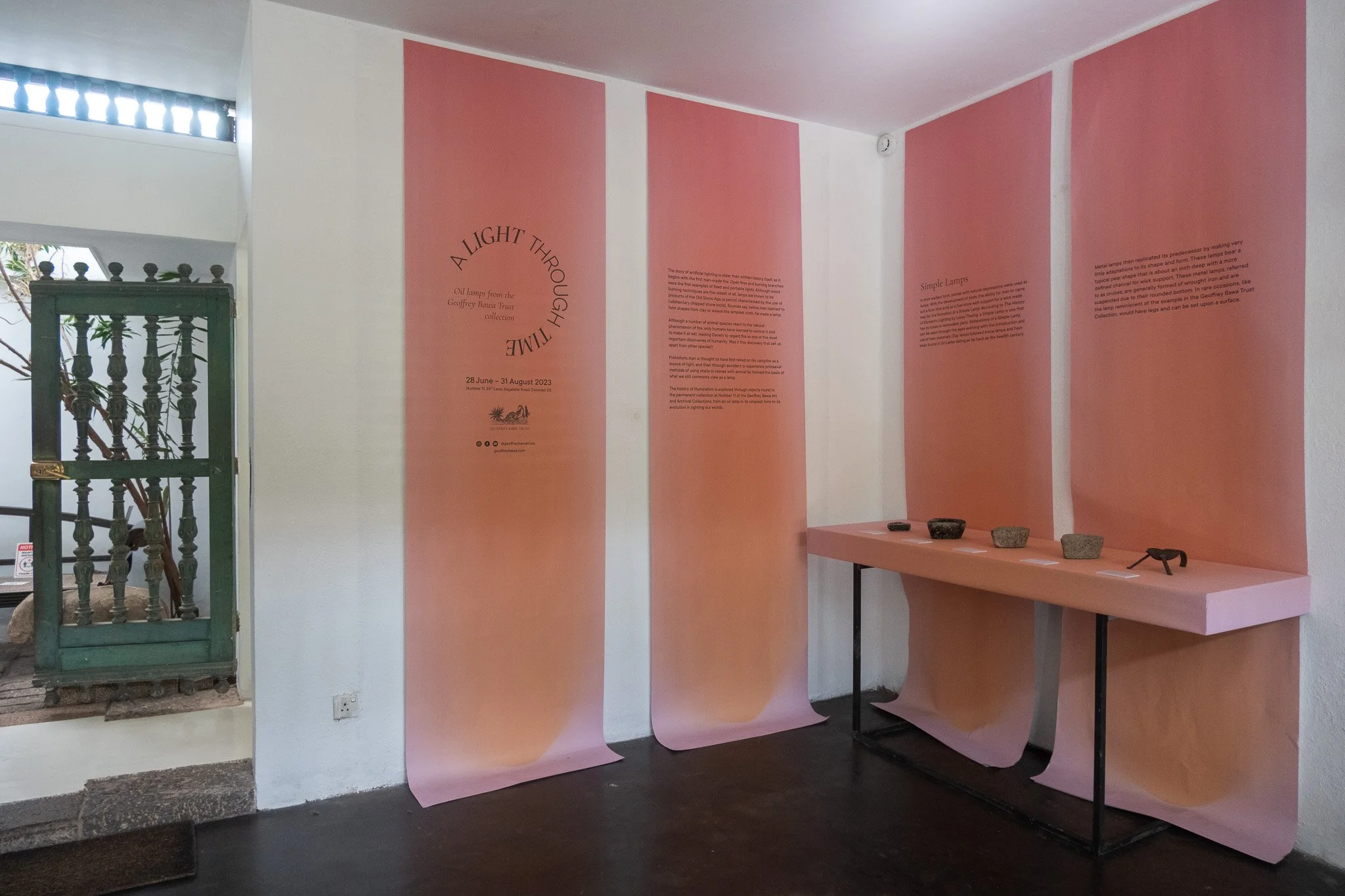
The story of artificial lighting is older than written history itself, as it begins with the first man-made fire. Open fires and burning branches were the first examples of fixed and portable lights. Although wood burning techniques are the oldest of all, lamps are known to be products of the Old Stone Age (a period characterised by the use of rudimentary chipped stone tools). Sources say, before man learned to form shapes from clay or weave the simplest cloth, he made a lamp.
Although a number of animal species react to the natural phenomenon of fire, only humans have learned to control it and to make it at will, leading Darwin to regard fire as one of the most important discoveries of humanity. Was it this discovery that set us apart from other species?
Prehistoric man is thought to have first relied on his campfire as a source of light, and then through accident or experience primaeval methods of using shells or stones with animal fat formed the basis of what we still commonly view as a lamp.
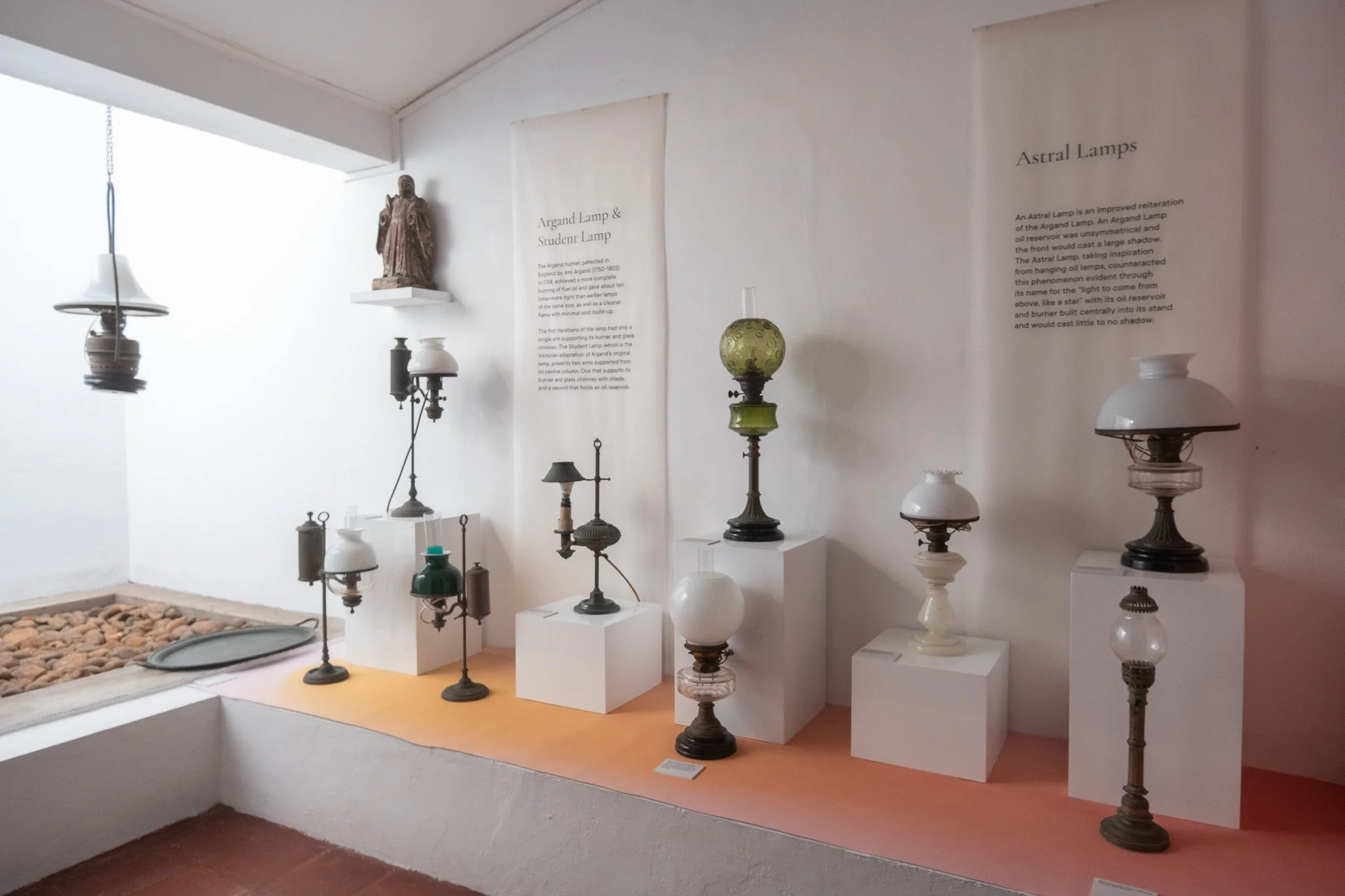
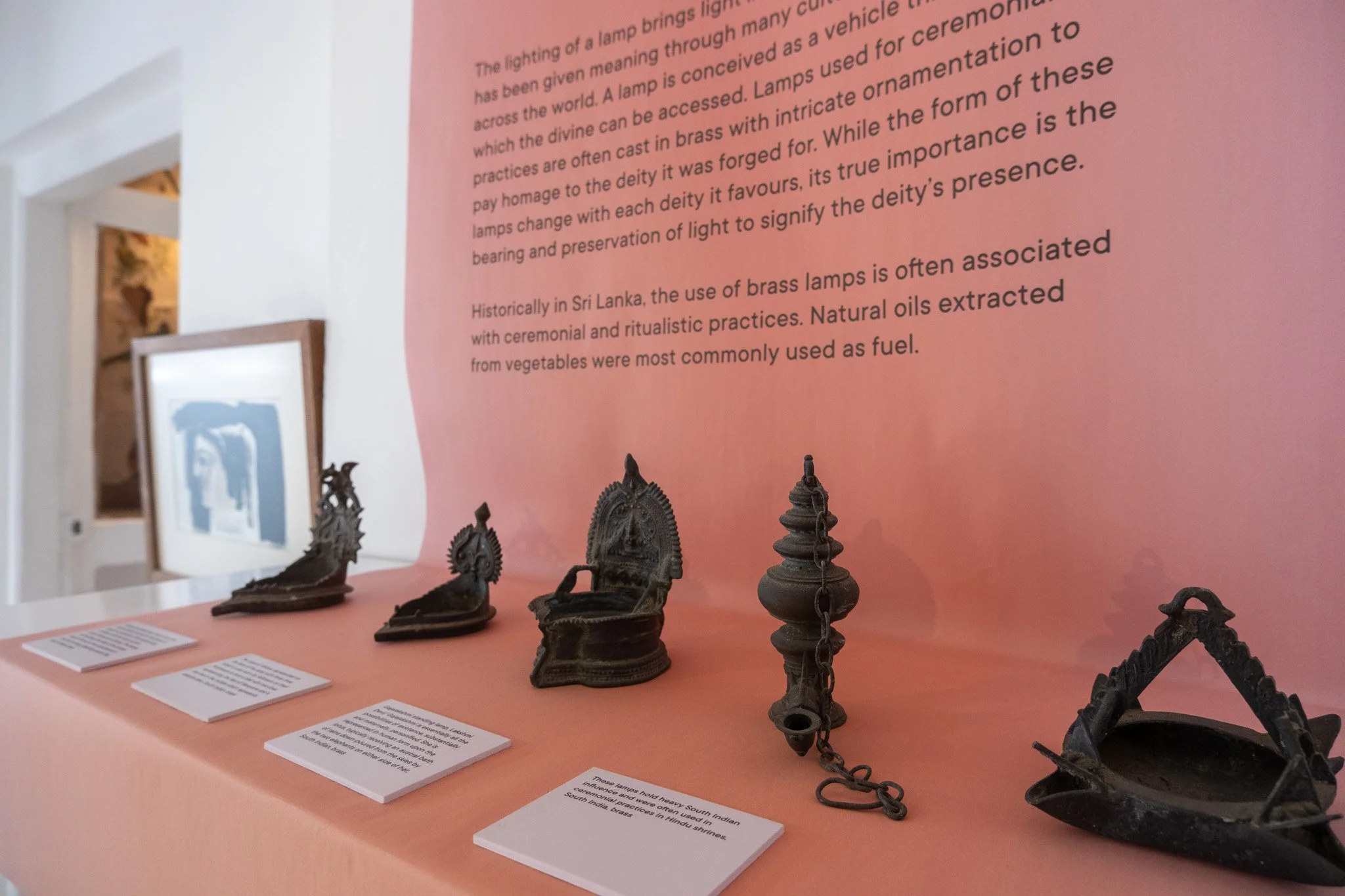
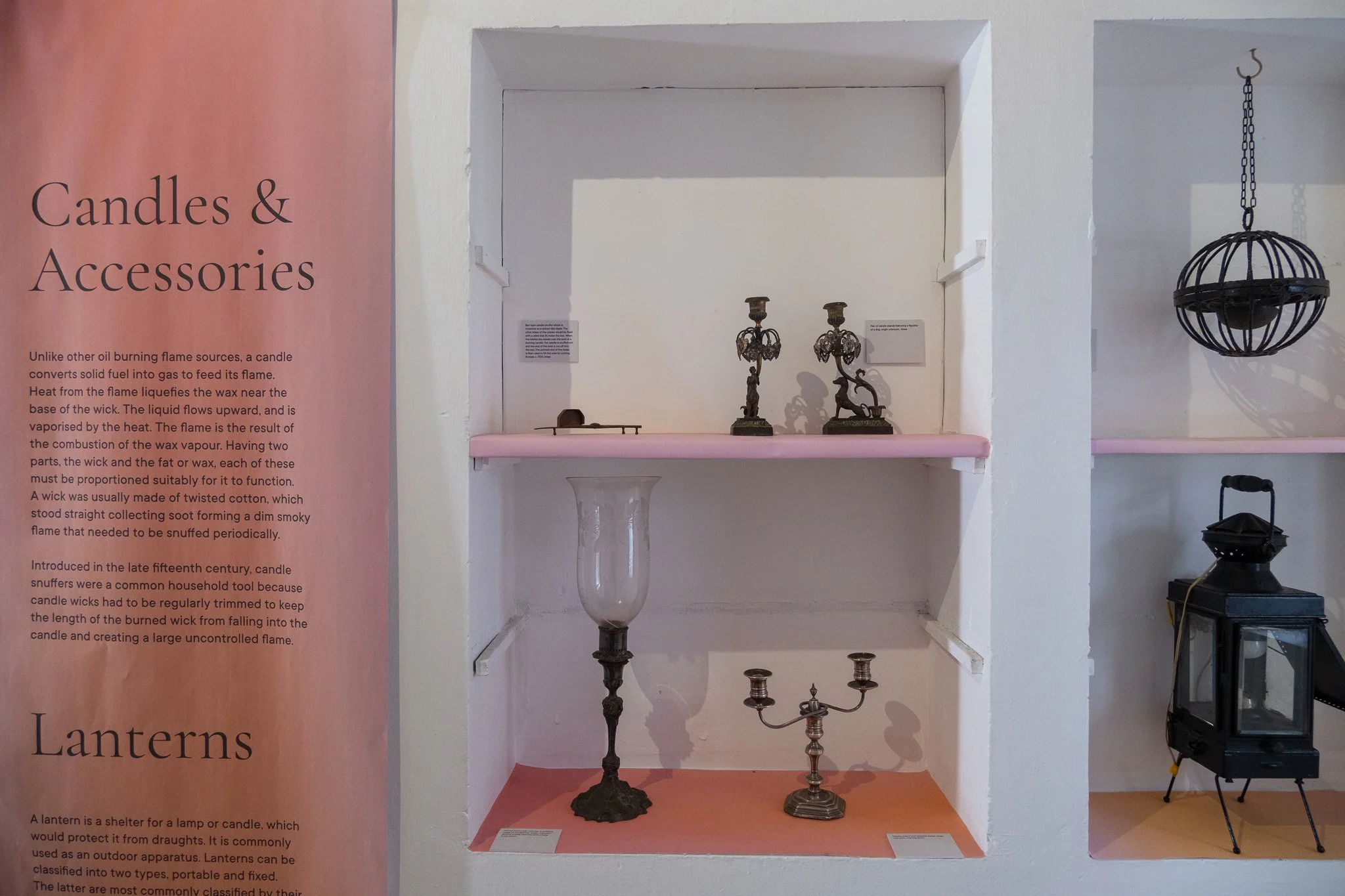
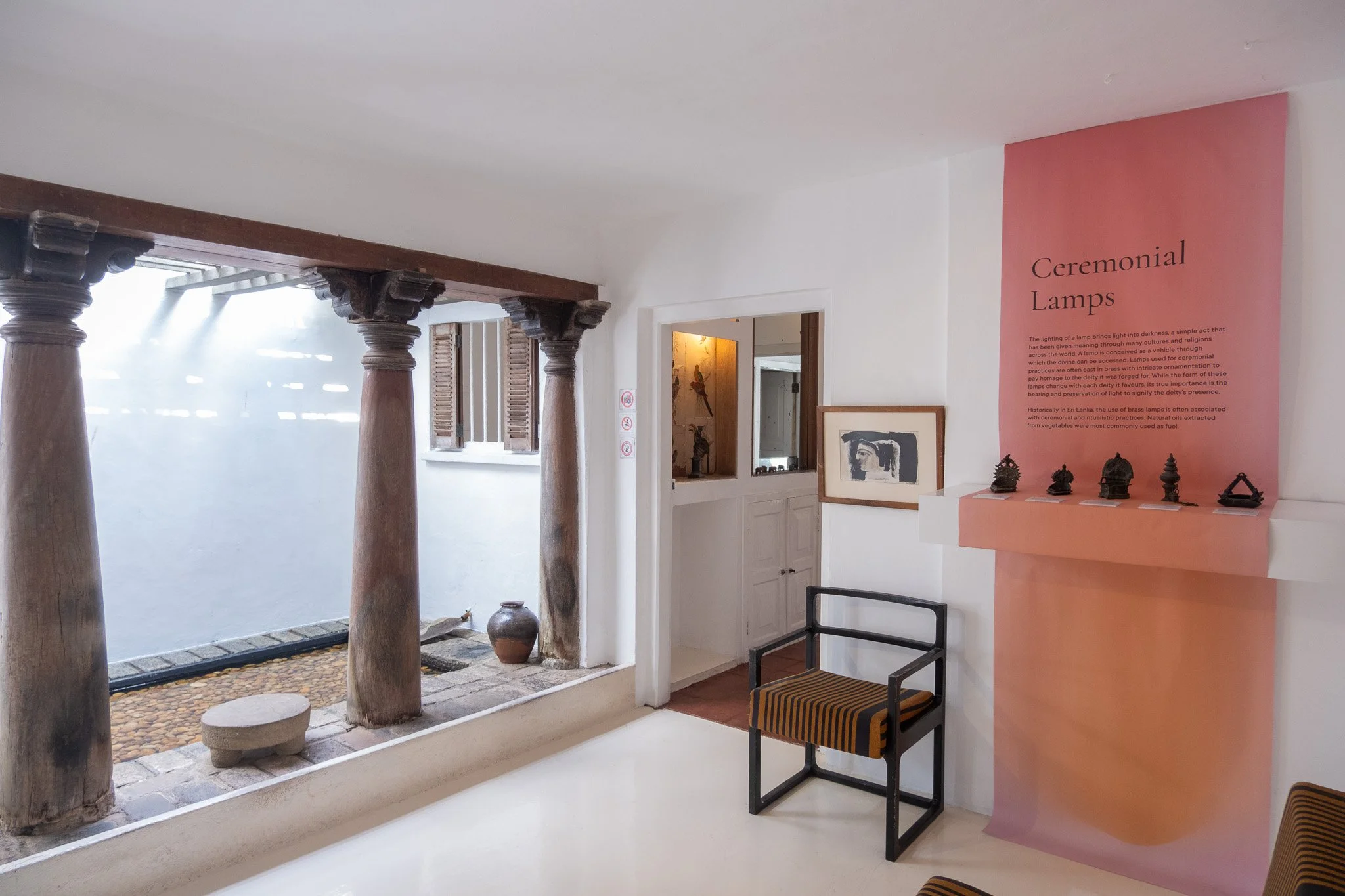
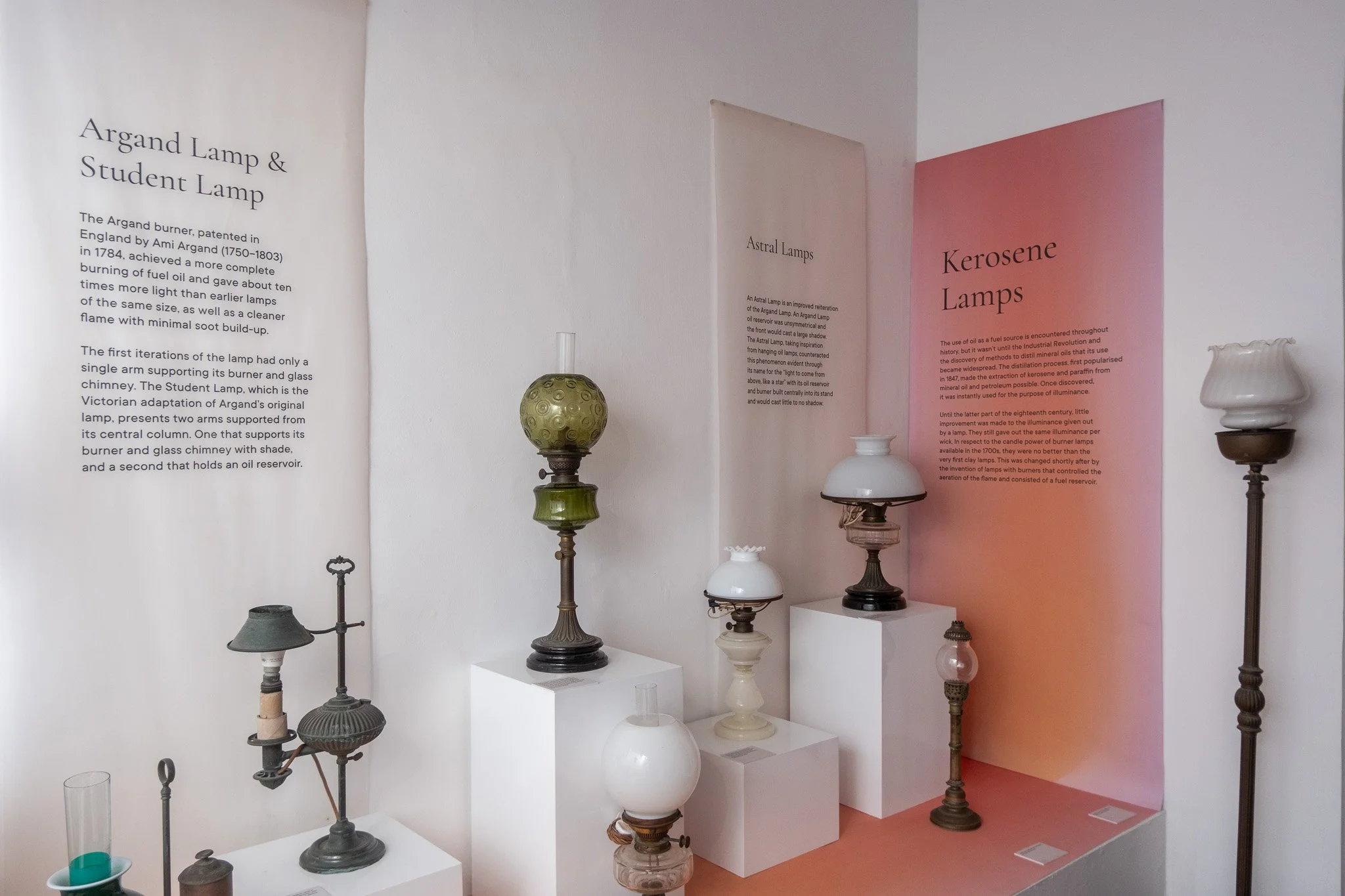
The history of illumination is explored through objects found in the permanent collection at Number 11 of the Geoffrey Bawa Art and Archival Collections, from an oil lamp in its simplest form to its evolution in lighting our worlds.