
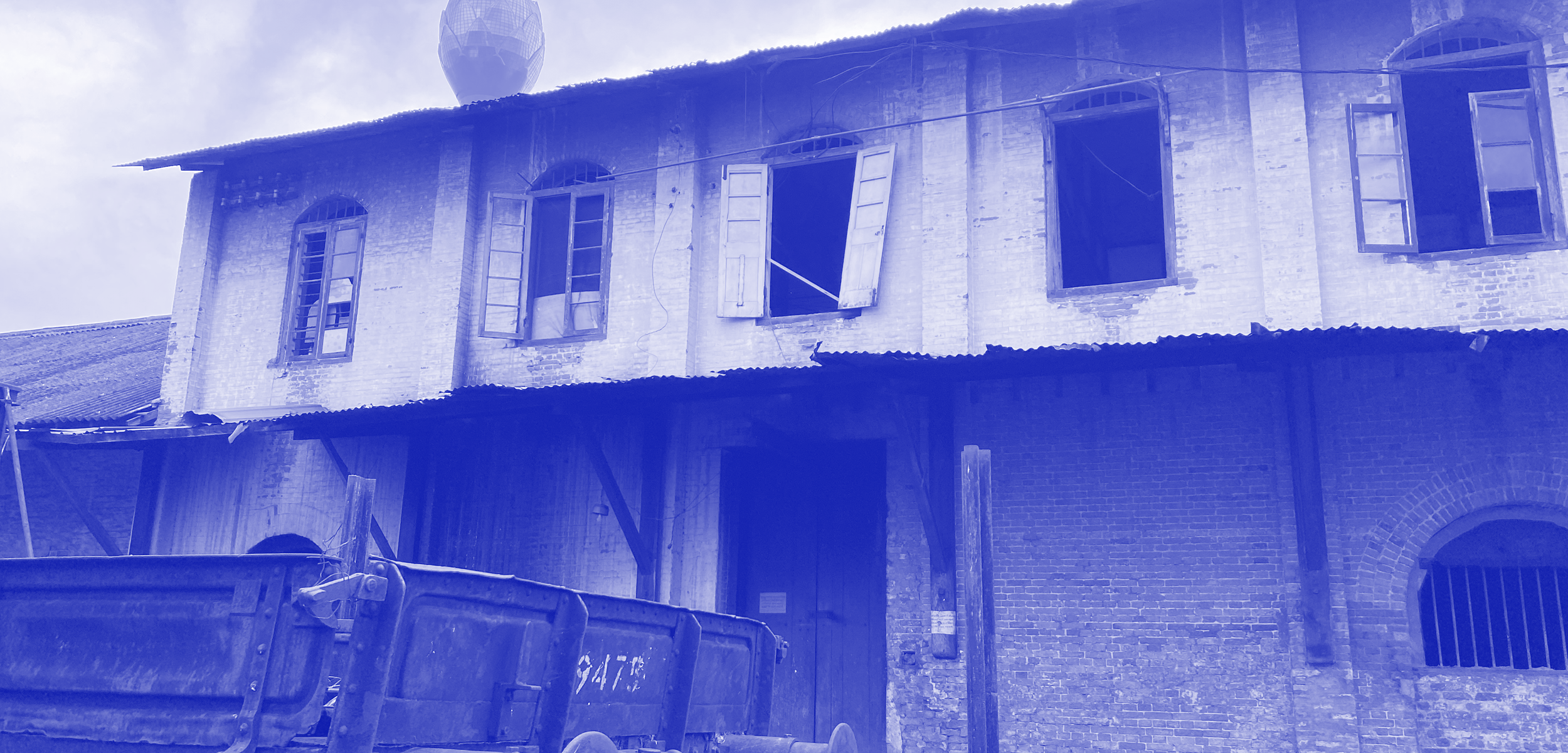
Architectural (Hi)stories:
Archives, Narratives, and the Built Environment
A seminar series with Dr Pamudu Tennakoon
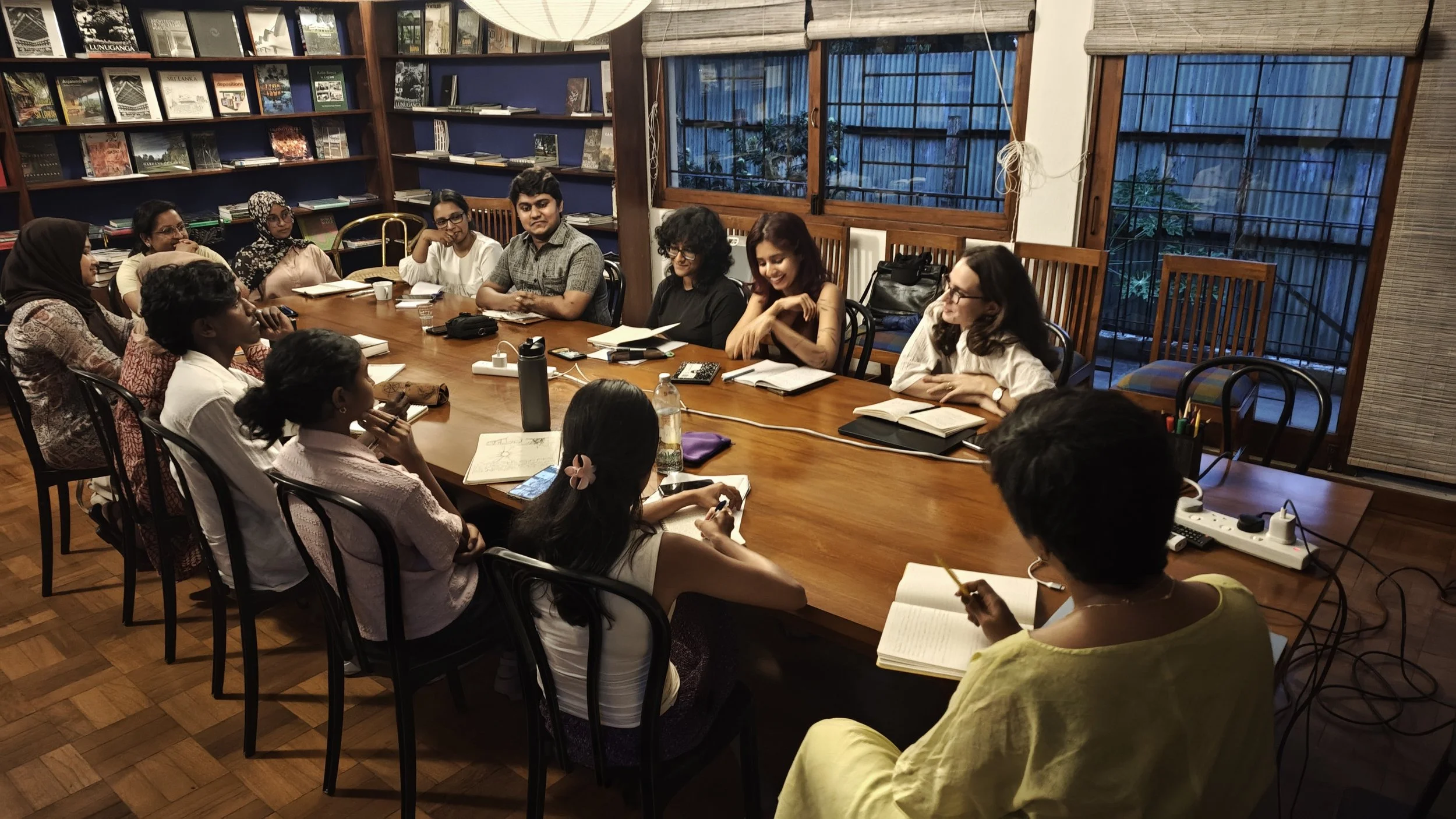
The Architectural Histories Seminar Series explored the role of oral history and storytelling within architectural research across centuries and geographies.
Led by architectural historian and academic Dr Pamudu Tennakoon, the Seminar Series invited participants to reframe how architecture is written, researched, and discussed by shifting away from a focus on architects, dates, and design toward a more nuanced, people-centric analysis of built space.
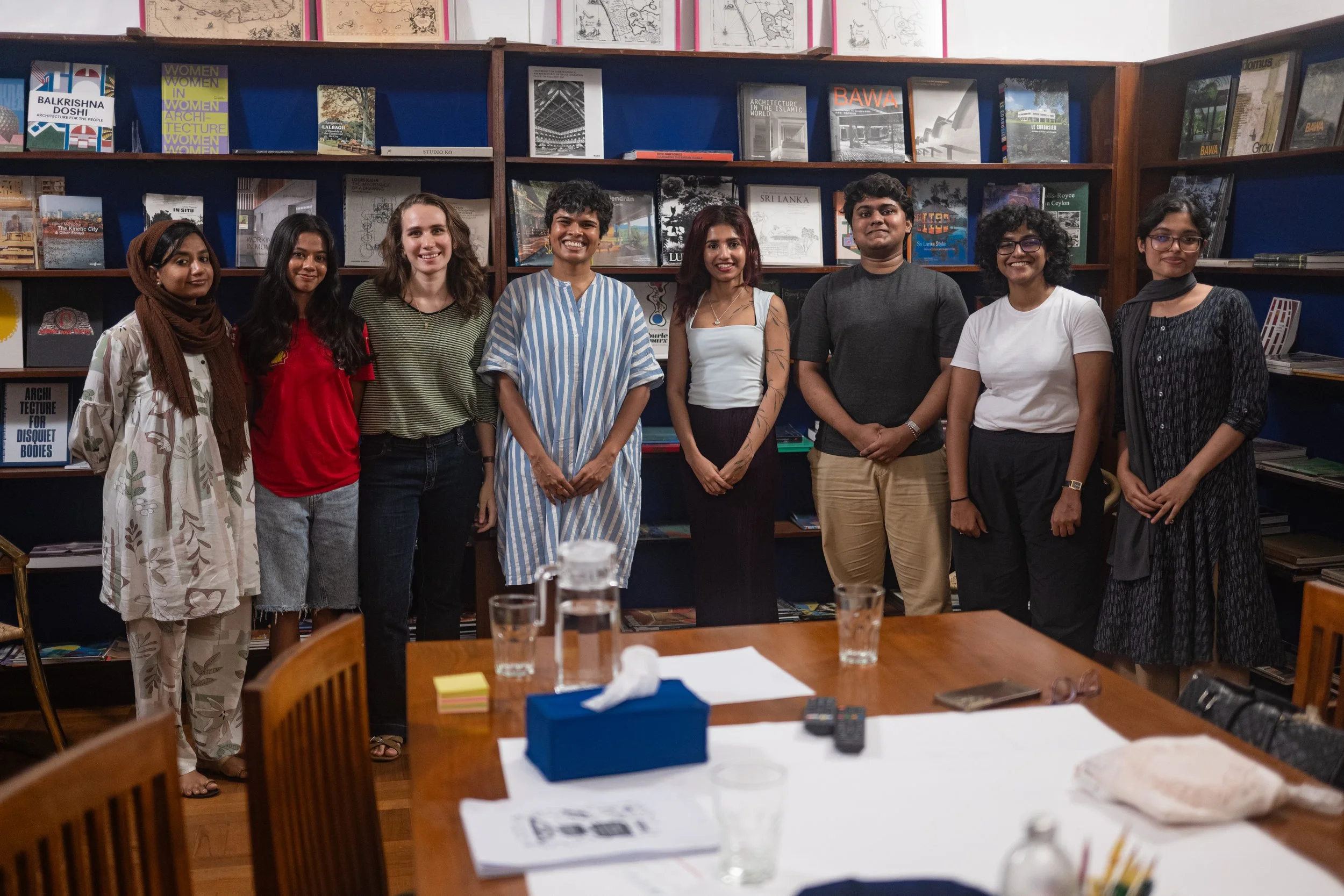
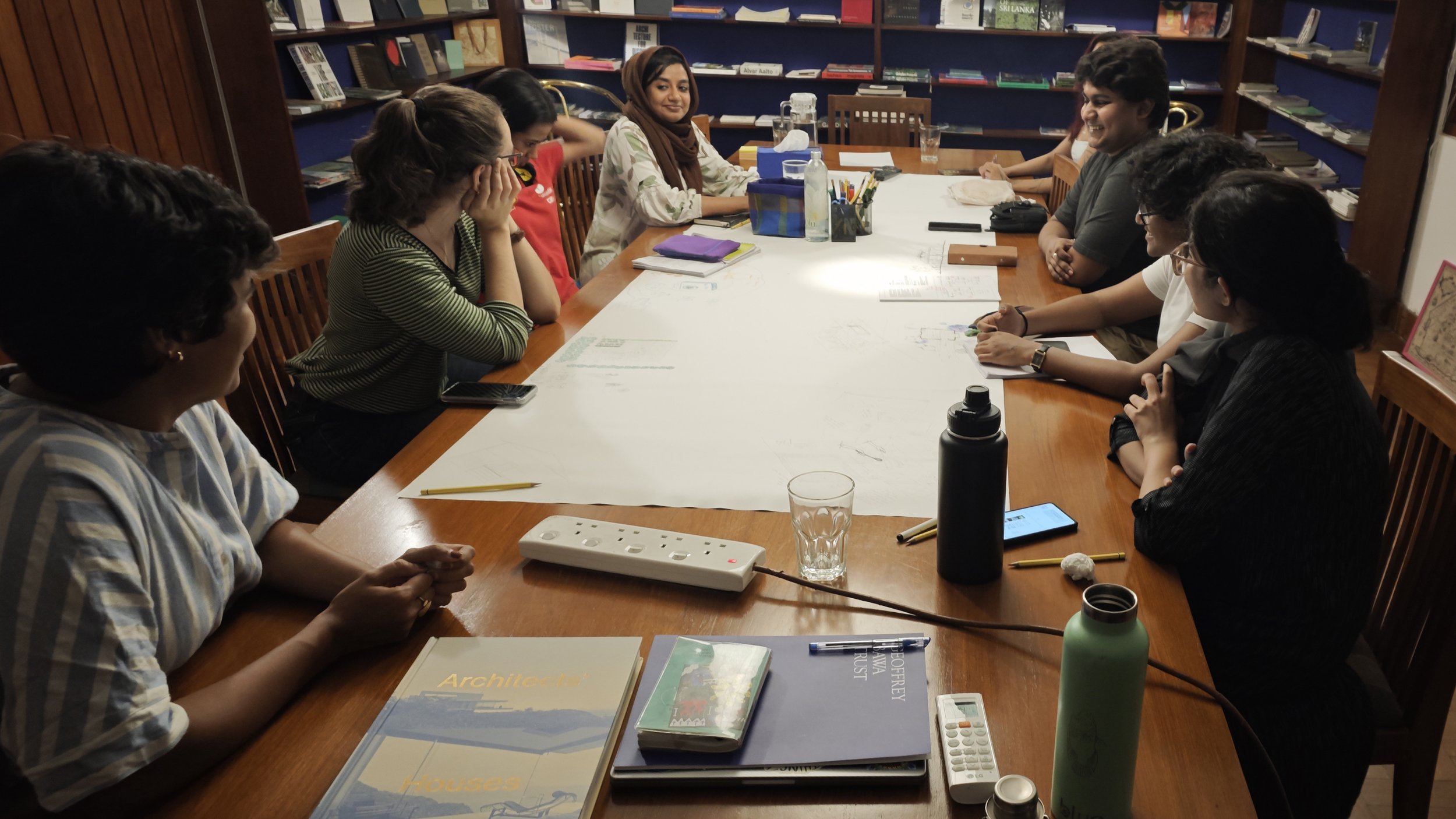
Through guided readings on architectural history and theory, alongside interviews, documentaries, and novels, Dr Tennakoon examined how architectural history is written and recorded, and asked participants to look at buildings as spaces that are lived in, engaged with, and understood as having a multitude of real and imagined lives and afterlives.
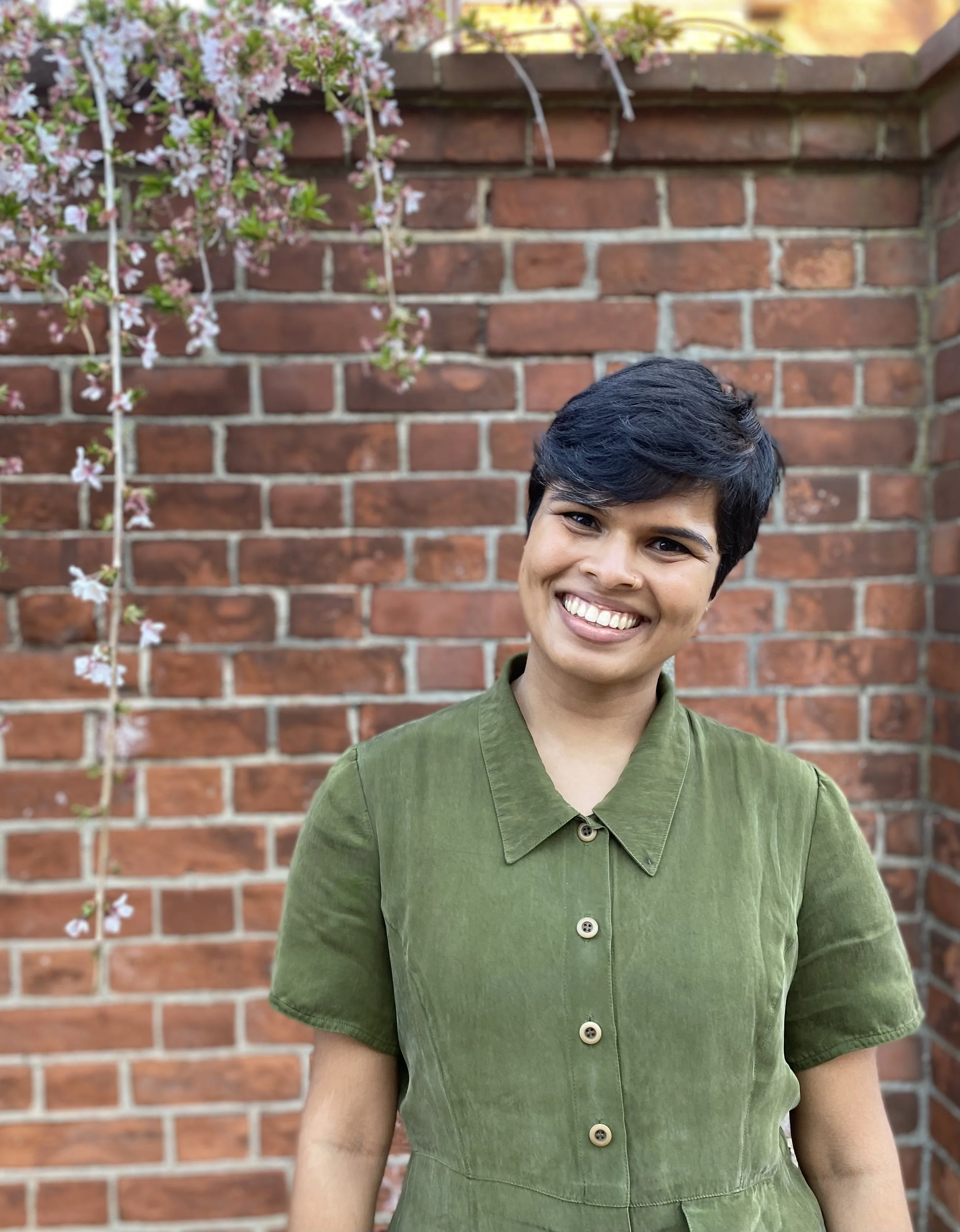
Dr Pamudu Tennakoon is an architectural and urban historian who holds a PhD in History of Art and Architecture and an MA in Anthropology from Brown University. She is currently a Postdoctoral Research Fellow with the Colombo: Layered Histories in a Global South City project at the University of Cambridge.
This free public seminar was held at the Geoffrey Bawa Space in Colombo and ran for six weeks throughout August and September 2026.
“Studying architecture from the perspectives of people such as historians and artists was really interesting and something that is often not covered or outright neglected in architectural education.”
- Liteira di Silvar, Student at the City School of Architecture, Colombo
“Hearing the insights of Dr Pamudu and the other participants on the articles we read really added to my depth of understanding and broadened my way of thinking.”
- Amaani, Graduate Architect
“This seminar expanded my perspective of architectural history to beyond buildings and established narratives. I particularly enjoyed learning how oral histories, personal memories and everyday experiences can reveal aspects of architecture and the built environment that may not appear in conventional architectural histories. The discussions also made me think critically about whose stories are recorded, whose voices are often left out, and how these perspectives can shape [how history is written]. The course also introduced me to research methods that I would like to explore further in my own work.”
- Anonymous